The questions everyone asks about solar, batteries and heat pumps
We spent some time reading through the energy boards on MoneySavingExpert, one of the busiest places in the UK for this kind of conversation. The same handful of questions come up again and again, from people at every stage, whether they're just getting quotes or trying to squeeze more out of a system they already have. Here are straight answers to the most common ones.
Is a home battery worth it, even without solar panels?
It can be, but only if you're on a tariff with a cheap rate. A battery makes money by filling up when electricity is cheap and running your home when it's expensive. On a flat tariff there's no gap to make money from, so there's little point.
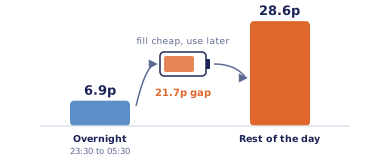
On a tariff like Intelligent Octopus Go, the gap is big. In one region today it's 6.9p per kWh overnight and 28.6p the rest of the time. If you filled a 10kWh battery every night and used all of it during the day, you'd save somewhere around £650 to £700 a year, once you allow for the energy lost in charging and discharging. Most homes won't use the whole battery every single day, so the real figure is usually lower. Our free battery payback calculator works it out month by month for your own usage and tariff.
Is my solar quote a fair price?
The government publishes what people actually paid, based on every installation registered with MCS. In the year to March 2026, the middle price for systems up to 4kW was £1,595 per kW, so about £6,400 for a 4kW system. Systems between 4kW and 10kW came in at £1,546 per kW. Adding panels to an existing home tends to cost more than fitting them to a new build, and the average for small retrofits was closer to £2,100 per kW.
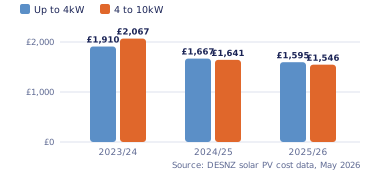
So if your quote is well above £2,000 per kW for a standard system, ask what you're getting for the extra. A battery, scaffolding on a tricky roof or premium panels can all justify it. A salesman in a hurry can't. Get at least three quotes.
Are solar panels worth it in Scotland?
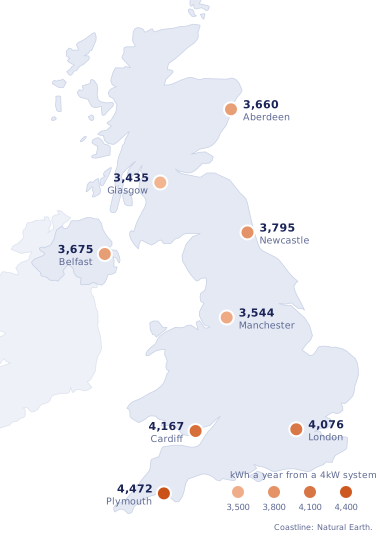
Yes, and the difference is smaller than most people expect. The map at the top of this post shows the same 4kW south-facing system in eight places, using long-term satellite solar data for each one. Plymouth comes out top at 4,472 kWh a year and Glasgow is lowest at 3,435, so even the dullest spot here makes about three-quarters as much. Cloud matters as much as how far north you are: Aberdeen and Newcastle both beat Manchester. Your roof's direction and shading matter more than which end of the country you live in. You can try your own postcode in our free annual generation calculator.
Which export tariff pays the most?
It changes often, so check before you sign up to anything. Rates range from a penny or two per kWh to well over 10p, and some of the best are only open to people who also buy their electricity from the same supplier. Others aren't. Fuse Energy, for example, pays 13p per kWh to anyone with an MCS certificate and a meter that records export. If you have a battery, look for a tariff that pays more at busy times, and check whether you're allowed to export from the battery as well as the panels.
Can I plug solar panels straight into a socket now?
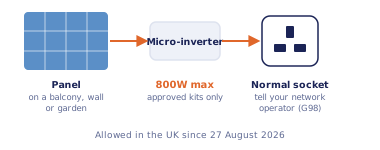
Yes, since 27 August 2026, as long as you follow the rules. The UK's wiring regulations now allow plug-in solar kits of up to 800W that connect through a normal socket. The kit has to be on the approved list, and there are only a handful so far. You also need to let your local network operator know using a short form called a G98. Don't expect to be paid for anything you send back to the grid, though. Without an export tariff and a meter that records it, that electricity is simply given away, so a small kit works best when it covers what your home is already using during the day.
How do I avoid a solar scam?
Use an installer that's MCS certified and a member of a consumer code such as RECC or HIES, because that's what protects you if things go wrong. Be wary of anyone who knocks on your door, promises you'll "pay nothing", or pushes you to sign on the day. You have a 14-day cooling-off period for contracts signed at home, so don't let anyone hurry you out of it.
Is Economy 7 still worth it?
For most homes, probably not any more. Economy 7 gives you seven hours of cheaper electricity at night, but the daytime rate is usually higher than a standard tariff, so it only pays if a large share of your use really does happen overnight, for example with storage heaters or a hot water tank on a timer. If you have an electric car or a battery, a smart tariff built for them will usually give you a much cheaper night rate.
Should I leave my heat pump running all the time?
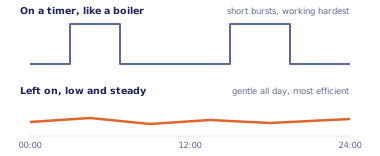
Usually, yes. Heat pumps work best running steadily at a low temperature, not blasting on and off like a gas boiler. The Energy Saving Trust says leaving one on for longer doesn't have to cost more, because it runs more efficiently. Its advice is to turn the flow temperature down a degree at a time until the house feels too cold, then put it back up by one. If your system has weather compensation, make sure your installer has set it up, because it adjusts the water temperature to the weather outside and a badly set one quietly pushes your bills up.
Is there a grant for a heat pump?
In England and Wales, the Boiler Upgrade Scheme takes £7,500 off an air source or ground source heat pump. Between 21 July 2026 and 31 March 2027, homes that are currently heated by oil or LPG can get £9,000 instead. Your MCS-certified installer applies for you and takes the grant off your bill. Air-to-air heat pumps don't qualify. Scotland has its own scheme through Home Energy Scotland.
Are the new cheaper suppliers safe?
Plenty of people ask this about Fuse Energy in particular. We looked at who's behind it, what customers say and what to check before switching in our Fuse Energy review. The short version is that if any supplier fails, Ofgem moves you to a new one, your supply carries on and your credit balance is protected.
Are Octopus Saving Sessions worth doing?
If you're with Octopus and have a smart meter, they cost nothing to try and you can't lose money on them. They've been happening far more often in 2026 than last year. Our Saving Sessions guide explains how they work, who can take part and how often they happen.
How do I know my system is doing what it should?
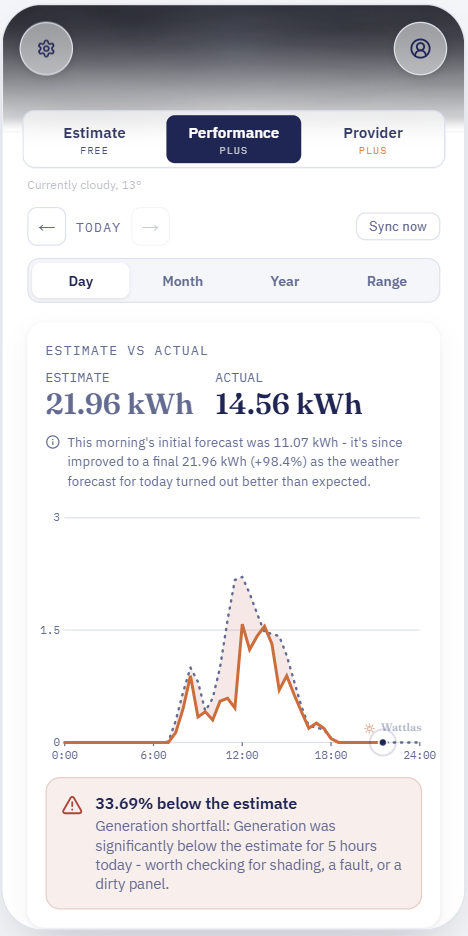
People tend to ask this once the panels are up. Your inverter's app shows what the system made, but it usually won't tell you whether that's what it should have made, given the weather. That's why we built Wattlas. It works out what your system should produce each day from the weather and your own setup, and tells you when the real figure falls short.
Sources
MoneySavingExpert Forum - Green & Ethical MoneySaving
MoneySavingExpert Forum - Energy
MoneySavingExpert Forum - Heat pumps
GOV.UK - Solar PV cost data (2025/26, published 28 May 2026)
Fuse Energy - export tariff (23 July 2026)
Balcony Solar Guide UK - Is plug-in solar legal in the UK?
WhichWatts - UK plug-in solar laws and G98 rules
Energy Saving Trust - The most efficient way to run a heat pump
Energy Saving Trust - Boiler Upgrade Scheme explained
Infinity Energy - Boiler Upgrade Scheme rises to £9,000 for
oil and LPG homes
Ofgem - What happens if your energy supplier goes bust
Start monitoring your home energy.
Solar, battery, car charging and energy tariff costs, all in Wattlas.